United States v. Maxwell
United States v. Maxwell: The SDNY Trial That Convicted Epstein's Most Prominent Associate
The three-week federal trial that produced testimony from four accusers, gripping accounts from household employees and pilots, 40 hours of jury deliberation, a guilty verdict on five of six counts, and a 20-year sentence — making it the most significant legal reckoning in the Epstein case.
The Indictment and Charges
Ghislaine Maxwell was arrested on July 2, 2020, by the FBI at a secluded property she had purchased in Bradford, New Hampshire, where she had been living under the name "Jen Marshall." The arrest came nearly a year after Epstein's death and followed an extensive investigation by the Southern District of New York. The original indictment, filed under case number 20-cr-330, charged Maxwell with six counts: conspiracy to entice minors to travel to engage in illegal sex acts, enticement of a minor to travel to engage in illegal sex acts, conspiracy to transport minors with intent to engage in criminal sexual activity, transportation of a minor with intent to engage in criminal sexual activity, sex trafficking conspiracy, and sex trafficking of a minor.
The charges centered on Maxwell's alleged role as a recruiter, groomer, and facilitator who identified and cultivated young girls for Epstein's sexual abuse between 1994 and 2004. Prosecutors alleged that Maxwell was not merely an employee or associate, but an active participant who befriended victims, normalized sexual conduct, and in some instances participated in the abuse herself. The indictment described a pattern in which Maxwell would establish a relationship of trust with young girls, often by taking them shopping, to the movies, or on trips, before introducing them to Epstein and facilitating sexual encounters at his properties.
The Four Accusers: Jane, Kate, Carolyn, and Annie Farmer
The prosecution's case was built around the testimony of four women who used pseudonyms at trial (except Annie Farmer, who chose to testify publicly). Each accuser described a distinct pattern of recruitment and abuse spanning different time periods and locations, but all pointed to Maxwell as the critical figure who facilitated their access to Epstein.
"Jane" testified that she first met Maxwell and Epstein at a music camp in Michigan in 1994, when she was 14 years old. Jane described how Maxwell befriended her and her mother, presented herself as a sophisticated older woman, and gradually drew Jane into Epstein's orbit. Jane testified that she was subjected to group sexual encounters involving both Epstein and Maxwell at the Palm Beach mansion and the New York townhouse. She described Maxwell as being present during and participating in some of the abuse.
"Kate" testified about her experiences beginning in 1994 in London, when she was 17. Kate described being introduced to Epstein through Maxwell and subsequently being flown to various Epstein properties. While Kate's age at the time placed her above the age of consent in the United Kingdom, her testimony was admitted to establish Maxwell's pattern of behavior as a recruiter and groomer.
"Carolyn" provided what many trial observers considered the most emotionally devastating testimony. Carolyn described being introduced to Epstein at the age of 14 through another young girl in her Palm Beach neighborhood. Carolyn testified that she visited the Palm Beach mansion approximately 100 times between ages 14 and 18, receiving cash payments of $300 per visit for sexual encounters. Carolyn described Maxwell as the person who managed the scheduling and payments, and who instructed her to recruit other young girls.
Annie Farmer, the only accuser who testified under her real name, described being recruited by Maxwell in 1996, when she was 16. Farmer testified about a visit to Epstein's Zorro Ranch in New Mexico, where she said Maxwell gave her an inappropriate massage during which Maxwell touched her breasts and directed her to massage Epstein. Farmer's decision to use her real name was described by prosecutors as an act of courage that underscored the credibility of her account.
Employee Testimony: Alessi, the Pilots, and Household Staff
Beyond the four accusers, the prosecution called current and former Epstein employees who provided corroborating testimony about the daily operations of Epstein's properties. Juan Alessi, who served as house manager at the Palm Beach mansion from approximately 1990 to 2002, gave detailed testimony about the constant flow of young women through the property. Alessi described a "58-page manual" of household rules that instructed staff to "see nothing, hear nothing, say nothing" about the activities occurring in the home.
Alessi testified that Maxwell functioned as the "lady of the house" and played a central role in managing Epstein's domestic and social life. He described Maxwell giving directions to staff, organizing schedules, and being present when young women visited the property. Alessi's testimony was considered important because it came from a neutral witness — an employee with no financial stake in the outcome of the trial — who could speak to the structure and hierarchy of Epstein's household.
Epstein's pilots, including Larry Visoski and David Rodgers, testified about the flights on Epstein's Boeing 727 and other aircraft. The pilots confirmed the identities of passengers on specific flights, corroborating the accusers' accounts of being transported between Epstein's properties. The flight logs maintained by the pilots were entered into evidence and used to establish a timeline of movements that matched the victims' testimonies.
The Defense: Scapegoat Theory
Maxwell's defense team, led by attorney Bobbi Sternheim, pursued a strategy centered on the argument that Maxwell was being used as a substitute for Epstein, who could no longer be prosecuted. In their opening statement, the defense told the jury: "Ghislaine Maxwell is not Jeffrey Epstein... She is being tried here as a scapegoat for a man who behaved badly."
The defense challenged the reliability of the accusers' memories, emphasizing that the alleged events occurred decades earlier and that recollections could be distorted by the passage of time, media coverage, and the influence of civil attorneys who had represented the women in lawsuits against Epstein's estate. The defense highlighted financial settlements that some accusers had received from the Epstein Victims' Compensation Fund, suggesting a potential financial motive for testimony.
Maxwell did not testify in her own defense. The defense called several witnesses, including a memory expert who discussed the malleability of long-term memory, but the defense case lasted only two days compared to the prosecution's two weeks of testimony.
Documentary Evidence and Exhibits
The prosecution presented extensive documentary evidence beyond witness testimony. This included photographs of Epstein's properties, massage tables, and personal items; records from Epstein's contact directories and message pads; bank records showing payments to accusers; travel records and passport stamps; and photographs of Maxwell and Epstein together at various locations over the years. The documentary evidence was designed to corroborate the accusers' accounts with physical proof of the activities and relationships they described.
One particularly significant exhibit was a photograph of Maxwell and Epstein relaxing together at what was identified as a cabin at the Queen's Balmoral estate in Scotland. Prosecutors used this and similar photographs to demonstrate the intimate and enduring nature of Maxwell's relationship with Epstein, countering the defense narrative that Maxwell was merely a casual employee.
Jury Deliberation and Verdict
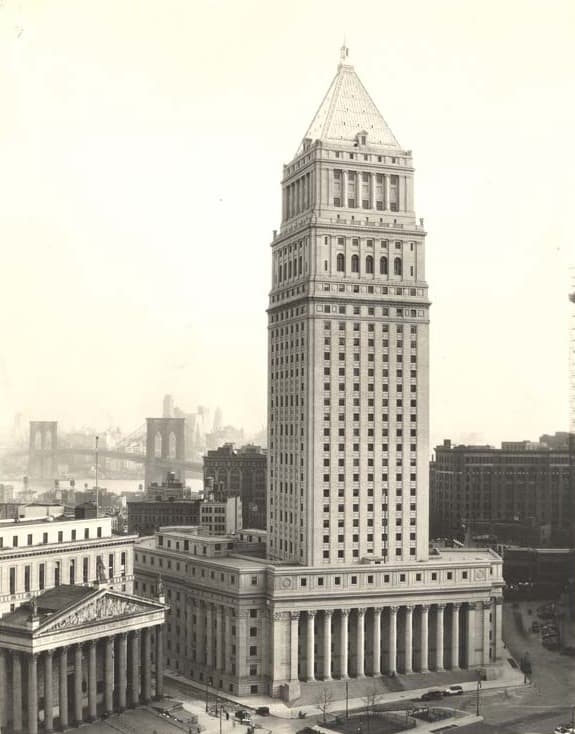
After closing arguments on December 20, 2021, the jury began deliberations. The 12-member jury, seated in the Thurgood Marshall United States Courthouse at 40 Foley Square in lower Manhattan, deliberated for approximately 40 hours over five full days of deliberations. On December 29, 2021, the jury returned its verdict.
Ghislaine Maxwell was found guilty on five of the six counts: conspiracy to entice minors to travel to engage in illegal sex acts (guilty), enticement of a minor to travel to engage in illegal sex acts (not guilty), conspiracy to transport minors with intent to engage in criminal sexual activity (guilty), transportation of a minor with intent to engage in criminal sexual activity (guilty), sex trafficking conspiracy (guilty), and sex trafficking of a minor (guilty). The sole acquittal was on Count Two, the substantive enticement charge.
The verdict was widely covered by international media and was hailed by victims' advocates as a landmark moment of accountability in a case that had spanned decades. Prosecutors from the SDNY stated that the verdict "sends a strong message that no one is above the law."
Sentencing and Incarceration
On June 28, 2022, Judge Alison J. Nathan sentenced Ghislaine Maxwell to 20 years in federal prison. In her sentencing memorandum, Judge Nathan noted the severity of the crimes, the vulnerability of the victims, and the duration of the conspiracy. At the sentencing hearing, several victims addressed the court directly, describing the lasting impact of the abuse on their lives.
Maxwell addressed the court before sentencing, expressing "sorrow" for the pain victims experienced but stopping short of admitting guilt to the specific charges. She stated that meeting Epstein was "the greatest regret of my life." Prosecutors had sought a sentence of 30 to 55 years; the defense had argued for a sentence below the federal guidelines range.
Maxwell is currently incarcerated at the Federal Correctional Institution in Tallahassee, Florida (FCI Tallahassee), a low-security federal prison. Her projected release date, accounting for good conduct time, is in the mid-2030s. Maxwell has filed an appeal with the Second Circuit Court of Appeals, raising multiple challenges to her conviction including arguments about the jury selection process and evidentiary rulings. As of this writing, the appeal remains pending.
Timeline: United States v. Maxwell
July 2, 2020
Ghislaine Maxwell arrested by FBI at secluded New Hampshire property; charged with six federal counts
July 2020 - Nov 2021
Maxwell held in pretrial detention at Metropolitan Detention Center, Brooklyn; multiple bail requests denied
Nov 29, 2021
Trial begins before Judge Alison J. Nathan at Thurgood Marshall Courthouse, Manhattan
Dec 1-3, 2021
"Jane" testifies about abuse beginning at age 14 at Palm Beach and New York properties
Dec 6-7, 2021
"Kate" testifies about recruitment in London at age 17 and transport to Epstein properties
Dec 7-8, 2021
"Carolyn" testifies about approximately 100 visits to Palm Beach mansion between ages 14 and 18
Dec 10, 2021
Annie Farmer testifies under her real name about abuse at Zorro Ranch at age 16
Dec 13-14, 2021
Juan Alessi testifies about household operations, the 58-page staff manual, and Maxwell's role
Dec 14-15, 2021
Pilots Larry Visoski and David Rodgers testify about flight logs and passenger manifests
Dec 16-17, 2021
Defense presents case; calls memory expert; Maxwell does not testify
Dec 20, 2021
Closing arguments delivered by both sides
Dec 29, 2021
Jury returns verdict: guilty on 5 of 6 counts after approximately 40 hours of deliberation
June 28, 2022
Judge Nathan sentences Maxwell to 20 years in federal prison
2022-present
Maxwell transferred to FCI Tallahassee; appeal filed with Second Circuit Court of Appeals