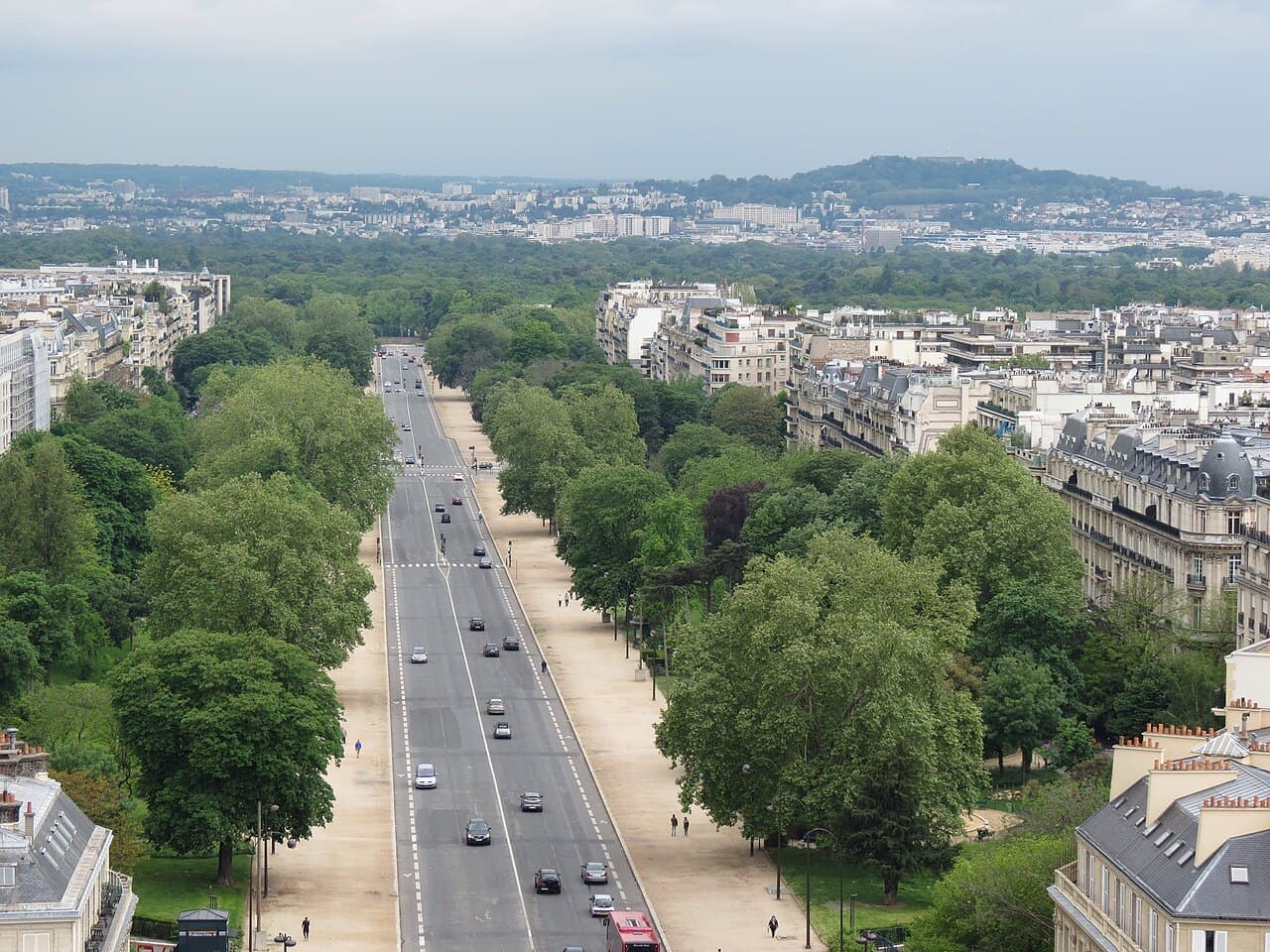
22 Avenue Foch, Paris
22 Avenue Foch: Inside Jeffrey Epstein's Paris Apartment and European Operation
How a luxury apartment on one of Paris's most prestigious boulevards served as the European hub of Jeffrey Epstein's operation — and its deep connections to Jean-Luc Brunel, the MC2 modeling agency, and a French investigation that came decades too late.
Avenue Foch: The Most Expensive Street in Paris
Avenue Foch is a 140-meter-wide boulevard stretching from the Arc de Triomphe to the edge of the Bois de Boulogne in Paris's 16th arrondissement. Named after the French Marshal Ferdinand Foch, it is consistently ranked among the most expensive residential streets in the world. The avenue was designed by Baron Haussmann during the Second Empire reconstruction of Paris and has long been home to diplomats, industrialists, and the European ultra-wealthy. Properties on Avenue Foch command prices of tens of thousands of euros per square meter, and the street's exclusivity has made it synonymous with old-money Parisian luxury.
Jeffrey Epstein's apartment occupied a prime position at number 22. The property was a large, multi-level apartment in one of the grand Haussmann-era buildings that line the boulevard. While not as expansive as his 28,000-square-foot Manhattan townhouse, the Paris apartment was substantial by European standards and served as Epstein's primary base during his frequent visits to France and continental Europe. The apartment's proximity to the Champs-Élysées, the Arc de Triomphe, and the city's most fashionable districts made it an ideal location for entertaining guests from the worlds of fashion, business, and politics.
Jean-Luc Brunel and the MC2 Modeling Agency
The Paris apartment's significance in the Epstein case cannot be understood without examining its connection to Jean-Luc Brunel, a French modeling agent who became one of the central figures in the European dimension of Epstein's operation. Brunel, born in 1946, was a well-known figure in the international modeling industry who had founded and operated multiple agencies across Paris, New York, and Miami over a career spanning four decades.
In 2005, Brunel co-founded MC2 Model Management with Epstein's financial backing. The agency, which operated offices in New York, Miami, and Tel Aviv, ostensibly represented aspiring models — many of them young women from Eastern Europe, South America, and developing nations who were seeking careers in the fashion industry. According to court filings and testimony from multiple witnesses, Epstein provided seed capital and ongoing financial support for MC2, and in return Brunel allegedly facilitated access to young women through the agency's operations.
Brunel had faced allegations of sexual misconduct long before his association with Epstein became public. A 1988 investigative report by CBS's 60 Minutes featured multiple models accusing Brunel of sexual assault and exploitation. Despite these public accusations, Brunel continued to operate in the industry with relative impunity for decades. His relationship with Epstein, which investigators believe began in the late 1990s, reportedly deepened after the founding of MC2. Flight logs from Epstein's Boeing 727 — the so-called "Lolita Express" — show Brunel as a frequent passenger on flights between New York, Paris, and the US Virgin Islands.
The European Fashion Industry Pipeline
Court documents and survivor testimony describe a pattern in which the Paris apartment functioned as a waystation in a pipeline that moved young women between Europe and Epstein's properties in the United States and the Caribbean. Women recruited through modeling agencies and scouts in Paris, Eastern Europe, and elsewhere would be brought to the Avenue Foch apartment, where they were allegedly introduced to Epstein under the guise of career opportunities in fashion.
Virginia Giuffre, one of the most prominent accusers in the Epstein case, described in sworn depositions being sent to the Paris apartment on multiple occasions. Giuffre alleged that she was directed to provide sexual services to Epstein and others at the Avenue Foch property, and that Brunel played a direct role in facilitating these encounters. Giuffre's testimony described the apartment as a location where Epstein entertained prominent European guests and where Brunel would bring young women he had recruited through his fashion industry contacts.
The cross-border nature of these movements presented enormous challenges for law enforcement. Victims were transported between France, the United States, and the US Virgin Islands — crossing multiple legal jurisdictions with distinct investigative authorities, evidence-sharing protocols, and statutes of limitations. This jurisdictional complexity is widely cited as one of the primary reasons Epstein's European operations escaped scrutiny for so long, even as his activities in Palm Beach and New York attracted investigation.
The French Investigation Opens: 2019
In August 2019, following Epstein's arrest and subsequent death in New York, French prosecutors opened a formal investigation into potential crimes committed on French soil. The Paris prosecutor's office announced the preliminary inquiry on August 23, 2019, focusing on allegations of rape, sexual assault, and human trafficking involving minors, as well as criminal conspiracy. The investigation was led by the Office central pour la répression des violences aux personnes (OCRVP), France's central office for combating violence against persons.
French investigators faced the immediate challenge that Epstein was already dead. Their inquiry shifted focus to alleged accomplices operating within France, with Brunel emerging as the primary target. Investigators examined records from the Avenue Foch apartment, interviewed potential victims in France, and coordinated with American authorities through mutual legal assistance treaties. The investigation also examined allegations that French citizens may have been among Epstein's victims — and that some of the abuse took place on French soil, bringing it within French jurisdiction regardless of Epstein's nationality.
Several French women came forward after the investigation was announced, filing complaints with Paris police alleging abuse at the Avenue Foch apartment and at other locations in France connected to Brunel's modeling activities. These complaints expanded the scope of the investigation beyond what American prosecutors had documented.
Brunel's Arrest at Charles de Gaulle Airport
On December 16, 2020, Jean-Luc Brunel was arrested at Charles de Gaulle Airport as he prepared to board a flight to Dakar, Senegal. French police, who had been monitoring Brunel's movements for months, intercepted him at the terminal. Brunel was charged with rape of minors, sexual harassment, and human trafficking of minors for sexual exploitation, as well as criminal association. The charges related to his alleged activities in France and his role as an intermediary who supplied young women to Epstein.
Brunel was placed in pretrial detention at La Santé prison in the 14th arrondissement of Paris. He denied all charges through his attorneys, who argued that Brunel was being used as a scapegoat because Epstein was no longer alive to face prosecution. His legal team requested bail on multiple occasions, but each request was denied by the investigating magistrates overseeing the case.
Brunel's Death at La Santé Prison: February 2022
On February 19, 2022, Jean-Luc Brunel was found dead in his cell at La Santé prison. He was 76 years old. French authorities ruled the death a suicide by hanging, stating that Brunel had used bedsheet strips to fashion a ligature. The death drew immediate comparisons to Epstein's own death at the Metropolitan Correctional Center in New York in August 2019, which was also ruled a suicide by hanging while the defendant awaited trial on sex trafficking charges.
Brunel's death effectively ended the French criminal investigation into his individual conduct, as French law does not permit the prosecution of deceased individuals. Attorneys for Brunel's accusers expressed frustration that victims had once again been denied the opportunity for judicial accountability. The broader French investigation into other potential accomplices reportedly continued, but no additional arrests have been publicly announced as of this writing.
The parallel deaths of Epstein and Brunel — both by hanging, both while in pretrial detention, both awaiting trial on sex trafficking charges — have been widely noted by commentators, journalists, and victims' advocates. The circumstances have prompted scrutiny of detention practices in both American and French correctional facilities and raised persistent questions about whether adequate measures were taken to prevent self-harm.
Cross-Border Challenges and Unresolved Questions
The Paris dimension of the Epstein case illustrates the profound difficulties of investigating and prosecuting international trafficking networks. French and American investigators operated under different legal frameworks, different evidentiary standards, and different traditions regarding victim protection and media reporting. France's strict privacy laws limited public reporting on the investigation, while the American system of unsealing court documents produced a steady stream of detailed allegations that French authorities could reference but not always independently verify.
The Avenue Foch apartment also raises questions about the broader network that supported Epstein's lifestyle in Europe. Property records, financial transactions, and staff arrangements for the Paris residence suggest a level of infrastructure — housekeepers, drivers, schedulers — that paralleled the staffing at Epstein's New York townhouse and Palm Beach mansion. Whether any of these individuals had knowledge of or involvement in the criminal activity remains an open question.
The property at 22 Avenue Foch was part of the estate proceedings that followed Epstein's death. Like his other properties — the private islands in the US Virgin Islands, the Zorro Ranch in New Mexico, and the Manhattan townhouse — the Paris apartment represented both a valuable financial asset and a potential crime scene. Its disposition was handled through the complex intersection of American estate law and French property regulations.
Timeline: Epstein's Paris Operation
1988
CBS 60 Minutes airs investigation into Jean-Luc Brunel featuring allegations of sexual misconduct by multiple models
Late 1990s
Epstein and Brunel establish relationship; Epstein acquires apartment at 22 Avenue Foch
2005
MC2 Model Management co-founded by Brunel with Epstein's financial backing; offices in New York, Miami, and Tel Aviv
2005-2006
Palm Beach Police Department investigation into Epstein begins; European connections not initially explored
2008
Epstein pleads guilty in Florida state case; Paris operations not addressed in plea agreement
July 2019
Epstein arrested at Teterboro Airport on SDNY federal charges after returning from Paris
Aug 10, 2019
Epstein found dead at Metropolitan Correctional Center in New York
Aug 23, 2019
French prosecutors open formal investigation into crimes committed on French soil
2019-2020
French victims file complaints with Paris police; investigation scope expands
Dec 16, 2020
Jean-Luc Brunel arrested at Charles de Gaulle Airport; charged with rape and trafficking of minors
2021
Brunel held at La Santé prison; bail denied multiple times; denies all charges
Feb 19, 2022
Brunel found dead in cell at La Santé prison; death ruled suicide by hanging