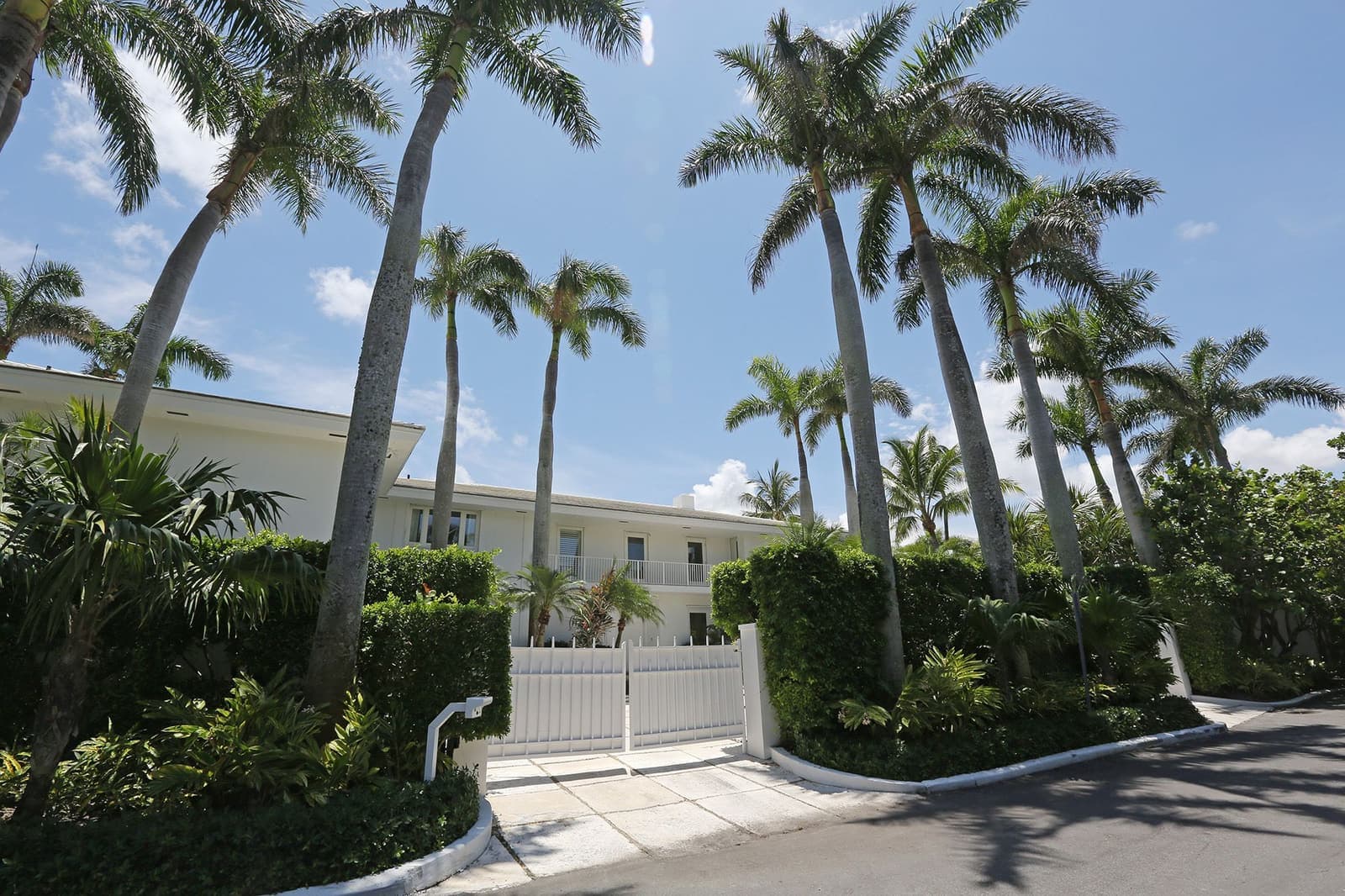
358 El Brillo Way, Palm Beach — The Palm Beach mansion where much of the documented abuse occurred. Palm Beach PD began investigation in 2005 after parent reported her 14-year-old was paid $300 for a 'massage.'
The waterfront estate at 358 El Brillo Way in Palm Beach, Florida, occupies a singular place in the Epstein case — it was here that the first formal law enforcement investigation began, and it was here that the systemic pattern of abuse was first documented by police. The property, a Mediterranean-style mansion situated on the Intracoastal Waterway, served as Epstein's primary winter residence from the early 1990s through his arrest in 2019.
The Palm Beach Police Department's involvement with the El Brillo Way property actually predates the well-known 2005 investigation. Records reveal that on December 6, 2001, officers opened an initial inquiry into activities at the residence. Detectives documented that Ghislaine Maxwell, identified as an English woman associated with Epstein, was actively recruiting young women. A police entry from December 10, 2001 noted that Maxwell 'said she needed young, beautiful unmarried women to answer phones.' Officers retrieved items from trash bins containing massage-service listings and 'lists of females with ages, descriptions and what they do.'
Despite these findings, the 2001 investigation was closed on April 25, 2002, with a four-page report concluding that 'although it appears as though unusual activity is occurring at this residence, at this time, no illegal activity has been reported or detected.' This closure represents one of the most significant missed opportunities in the case — had authorities acted on the 2001 evidence, years of subsequent abuse might have been prevented.
The investigation that would ultimately lead to criminal charges began in March 2005, when the mother of a 14-year-old girl contacted Palm Beach police to report that her daughter had been paid $300 to give Epstein a 'massage' at the El Brillo Way mansion. Detective Michele Pagan was assigned the case and quickly uncovered a sprawling recruitment network operating from the property. Victims described being brought to a second-floor room containing a massage table, where they were subjected to escalating sexual abuse.
Juan Alessi, Epstein's former house manager who worked at the Palm Beach property for over a decade, provided critical testimony about daily operations. He described a detailed list of instructions for staff that included preparing the massage room, ensuring supplies of lotion and towels, and cleaning the space after each 'appointment.' Alessi testified that he observed a steady stream of young women visiting the property, sometimes multiple times per day, and that he was instructed by both Epstein and Maxwell on how to maintain discretion.
The Palm Beach investigation ultimately identified over 30 victims connected to the El Brillo Way property. Despite this evidence, the case was controversially handled through a 2007 non-prosecution agreement negotiated by Epstein's defense team — led by attorneys including Alan Dershowitz, Kenneth Starr, and Jay Lefkowitz — with then-U.S. Attorney Alexander Acosta. The plea deal allowed Epstein to plead guilty to state prostitution charges and serve just 13 months in the Palm Beach County Stockade, with work release privileges that permitted him to leave custody for 12 hours a day, six days a week.
After Epstein's death, his estate sold the Palm Beach property in 2021 for approximately $25.8 million to a developer who subsequently demolished the mansion. The decision to tear down the house was widely covered in Palm Beach media, with local residents expressing relief that the property — which had become a grim landmark — would be replaced. The lot, valued for its waterfront position and 170 feet of Intracoastal frontage, was approved for new residential construction. Proceeds from the sale were contributed to the Epstein Victims' Compensation Fund alongside other liquidated assets from the estate.
The El Brillo Way property remains central to ongoing legal proceedings. Victim testimonies from the Palm Beach investigation were incorporated into the federal case brought by SDNY in 2019 and featured prominently in the Ghislaine Maxwell trial in December 2021. The property's address has become synonymous with institutional failure — a place where abuse was documented by police as early as 2001 but was not met with meaningful prosecution for nearly two decades.
358 El Brillo Way: Inside Jeffrey Epstein's Palm Beach Mansion and the Investigation That Nearly Stopped Him
How a waterfront estate on the Intracoastal became the epicenter of one of the most documented patterns of abuse in American criminal history — and how two separate police investigations failed to produce meaningful prosecution for nearly twenty years.