Mar-a-Lago: The Recruitment of
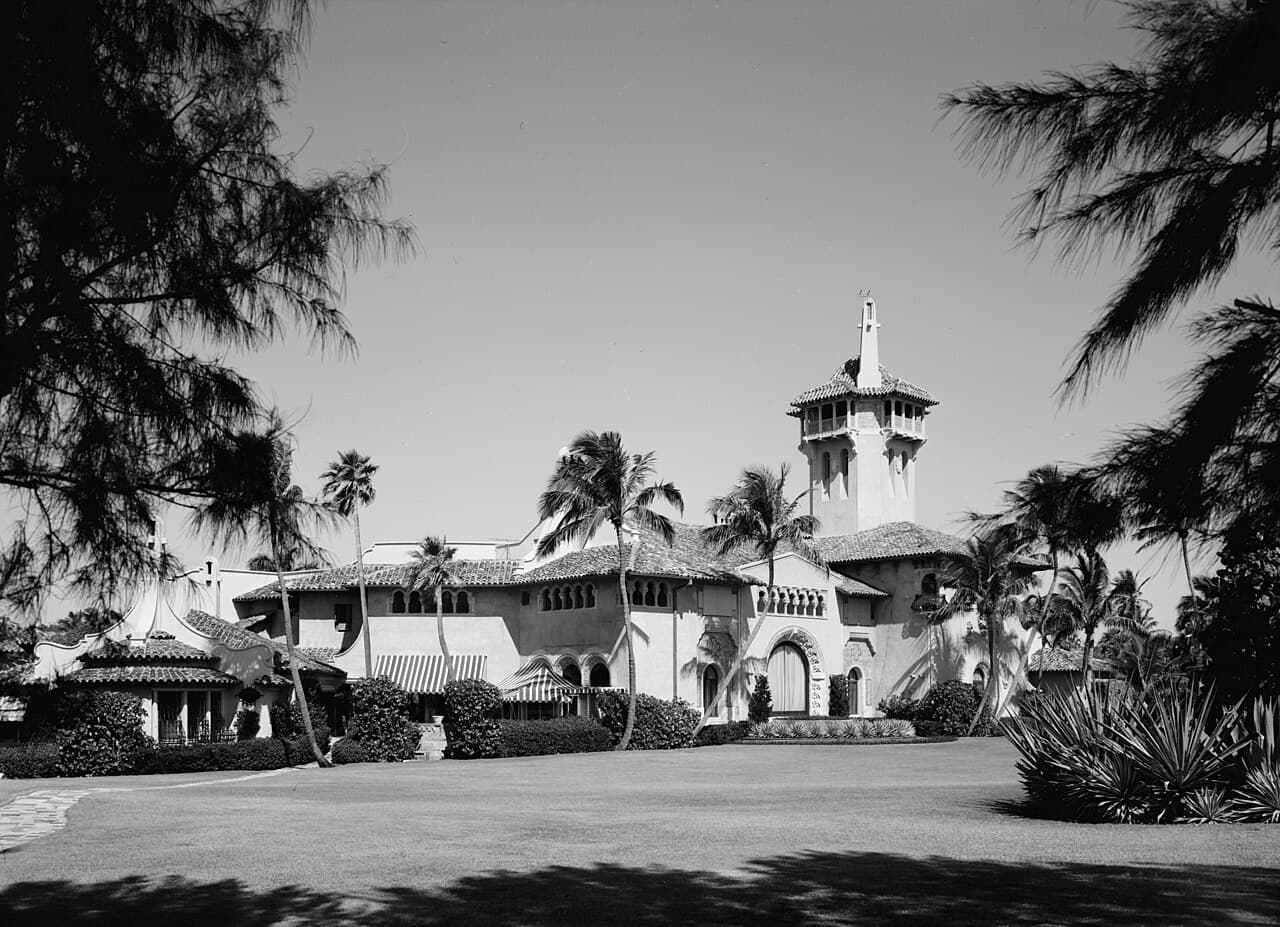
Mar-a-Lago Club, Palm Beach — Where Virginia Giuffre was recruited at age 16 in 2000 while working as a locker room attendant
Evidence2000

Mar-a-Lago: The Recruitment of Virginia Giuffre

Mar-a-Lago, the historic Palm Beach estate that serves as a private club, was the site of one of the most consequential recruitment events in the Epstein case. In the summer of 2000, Virginia Roberts — who would later become Virginia Giuffre, one of the most prominent accusers in the case — was working as a 16-year-old locker room attendant at the club when Ghislaine Maxwell approached her and offered her a job working for a wealthy man who needed a massage therapist.

Giuffre has described the recruitment in detail across multiple legal proceedings, sworn declarations, and public statements. She testified that Maxwell told her she could earn money giving massages to a prominent financier and presented the opportunity as legitimate employment. Giuffre, who came from a troubled background and was working at the club through her father's employment there, accepted the offer. She was subsequently taken to Epstein's nearby Palm Beach mansion at 358 El Brillo Way, beginning a period of abuse that she says lasted several years.

The Mar-a-Lago recruitment is significant not only for its centrality to Giuffre's account but for what it reveals about the methods used by Maxwell and Epstein to identify and approach potential victims. The use of a prestigious social club as a recruitment venue reflected the brazenness of the operation — Maxwell approached a teenage employee in a semi-public setting at a club frequented by some of the wealthiest and most powerful people in the country.

Scroll below the phone to continue reading the full article (4 more sections)

Mar-a-Lago club in Palm Beach, Florida — the location where Ghislaine Maxwell recruited 16-year-old Virginia Roberts as a massage therapist for Jeffrey Epstein in the summer of 2000
Mar-a-Lago, Palm Beach, Florida — the elite social club where Ghislaine Maxwell approached 16-year-old Virginia Roberts in the summer of 2000, recruiting her into Jeffrey Epstein's trafficking network under the guise of a massage therapist position.

Virginia Giuffre's Recruitment at Mar-a-Lago: How a Chance Encounter Exposed Epstein's Trafficking Network

In the summer of 2000, 16-year-old Virginia Roberts was working as a locker room attendant at Mar-a-Lago when Ghislaine Maxwell offered her a job as a massage therapist. That encounter would lead to years of trafficking across continents — and ultimately produce the most significant document release in the entire Epstein case.

Sources: Court Filings (SDNY), Victim Testimony, Deposition Transcripts, Giuffre v. Maxwell (15-cv-07433)

Mar-a-Lago: The Site of Recruitment

Mar-a-Lago, the 126-room Palm Beach estate built in the 1920s by cereal heiress Marjorie Merriweather Post, was converted into a private club by Donald Trump in 1995. By the summer of 2000, it had become one of the most exclusive social venues in South Florida — a gathering place for wealthy members, political figures, and celebrities. Jeffrey Epstein was a member of the club during this period, and it was within these grounds that one of the most consequential encounters in the entire Epstein case took place.

Virginia Roberts, then 16 years old and living in the Palm Beach area, had recently secured a position as a locker room attendant at Mar-a-Lago's spa through her father, who worked at the club as a maintenance manager. The job was a step up for Roberts, who had endured a troubled childhood including periods of homelessness and prior abuse. Working at one of America's most prestigious private clubs seemed like an opportunity for stability.

Ghislaine Maxwell's Approach

According to Virginia Roberts Giuffre's sworn testimony and court filings, she was reading a book on massage therapy during a break at Mar-a-Lago when she was approached by Ghislaine Maxwell. Maxwell, a British socialite and the daughter of media magnate Robert Maxwell, was Epstein's longtime companion and, as prosecutors would later establish, a central figure in his trafficking operation.

Maxwell noticed the massage book and struck up a conversation. She told Roberts that she knew a wealthy man who was looking for a personal massage therapist and that the job would pay well. The offer appeared legitimate — a young woman interested in massage therapy being connected with a wealthy client at an elite club. Roberts, eager for better-paying work, agreed to meet the man. Maxwell drove her to Jeffrey Epstein's nearby Palm Beach residence at 358 El Brillo Way that same day.

At the Palm Beach house, Roberts was instructed to give Epstein a massage. According to her detailed testimony in multiple legal proceedings, the encounter quickly escalated to sexual abuse. She was 16 years old. Rather than a single incident, this first visit established a pattern that would continue for the next several years.

Trafficking Across Multiple Properties and Countries

Following her initial recruitment, Giuffre was trafficked to multiple Epstein properties and locations around the world. Court filings and her sworn depositions describe being transported to Epstein's Manhattan townhouse at 9 East 71st Street, his ranch in Stanley, New Mexico (Zorro Ranch), his private island Little St. James in the US Virgin Islands, his apartment at 22 Avenue Foch in Paris, and locations in London. At each property, she described being subjected to sexual abuse by Epstein and, in some instances, being directed to have sexual encounters with other individuals.

Giuffre has testified that she was flown on Epstein's private aircraft — the Boeing 727 known publicly as the "Lolita Express" — between these locations. Flight logs subpoenaed during litigation confirmed her presence on multiple flights. Ghislaine Maxwell, according to Giuffre's testimony, played a direct role in managing the logistics of these trips and in directing the abuse.

Introduction to Prominent Individuals

Among the most explosive allegations in Giuffre's testimony was her claim that she was introduced to and directed to have sexual encounters with prominent individuals in Epstein's social circle. The most high-profile of these allegations involved Prince Andrew, Duke of York. Giuffre stated under oath that she was trafficked to London, where she met Prince Andrew on multiple occasions and was directed by Epstein and Maxwell to have sexual encounters with him. A widely published photograph shows Giuffre standing with Prince Andrew, with Maxwell in the background.

Prince Andrew denied the allegations. In February 2022, he reached a settlement with Giuffre in her civil lawsuit (Giuffre v. Prince Andrew, filed in SDNY) for a reported sum, the exact terms of which were not publicly disclosed. The settlement included no admission of wrongdoing.

Epstein's Membership and Departure from Mar-a-Lago

Jeffrey Epstein was a member of Mar-a-Lago during the period of Giuffre's recruitment. His membership and access to the club provided a veneer of social legitimacy that facilitated the recruitment process. The club's exclusive environment — where members were assumed to be vetted and reputable — made Maxwell's job offer appear credible and safe to a 16-year-old employee.

Epstein was later barred from Mar-a-Lago, reportedly around 2007, though accounts differ on the exact timeline and circumstances. Some reports indicate the ban followed complaints about Epstein's behavior toward young women at the club. Others have suggested it stemmed from a real estate dispute. Regardless of the specific cause, the ban came years after the recruitment of Giuffre and after the Palm Beach police investigation into Epstein had already begun in 2005.

The Brazenness of Recruiting at an Elite Social Club

The fact that Giuffre's recruitment took place at one of America's most prominent private clubs underscored a pattern that investigators and prosecutors would later emphasize: Epstein and Maxwell operated in plain sight, leveraging their social standing and access to elite institutions as tools of recruitment. The approach at Mar-a-Lago was not a clandestine operation conducted in secret — it occurred during normal business hours, at a workplace, in the guise of a legitimate job offer.

This brazenness extended across Epstein's entire operation. Young women were recruited from schools, shopping malls, and through social connections. The Mar-a-Lago recruitment, however, remains among the most well-documented examples because of Giuffre's extensive testimony and the specificity of the setting. It illustrated how wealth and social access could be weaponized to target vulnerable individuals in environments where they had the least reason to be suspicious.

Giuffre's Civil Lawsuits: 2009 Onward

Virginia Giuffre became one of the first Epstein victims to pursue civil litigation. In 2009, she joined the Crime Victims' Rights Act lawsuit filed by attorney Brad Edwards, which challenged the 2008 Non-Prosecution Agreement (NPA) negotiated between Epstein's legal team and the US Attorney's Office for the Southern District of Florida. That agreement, brokered by then-US Attorney Alexander Acosta, had allowed Epstein to plead guilty to state prostitution charges rather than face federal sex trafficking charges, and was later widely condemned as a miscarriage of justice.

Giuffre's willingness to testify publicly and under oath distinguished her from many other victims who chose to remain anonymous. Her detailed accounts — naming specific individuals, dates, locations, and events — provided a factual framework that journalists, investigators, and prosecutors would rely on for over a decade.

Giuffre v. Maxwell (15-cv-07433, SDNY) and the Document Unsealing

In 2015, Virginia Giuffre filed a defamation lawsuit against Ghislaine Maxwell in the Southern District of New York, case number 15-cv-07433. Maxwell had publicly called Giuffre a liar after Giuffre's allegations were included in a court filing in the Crime Victims' Rights Act case. The defamation suit was settled in 2017 for an undisclosed amount, but the case produced a massive volume of sealed documents — depositions, flight logs, testimony transcripts, police reports, and personal communications.

In 2019, the Miami Herald and other media organizations petitioned to unseal documents from Giuffre v. Maxwell. Federal Judge Loretta Preska presided over the unsealing process, which unfolded in multiple rounds between 2019 and January 2024. Over the course of these releases, approximately 4,000 pages of documents were made public, including names of individuals previously redacted, deposition transcripts from both Giuffre and Maxwell, and internal communications that provided new details about Epstein's network.

The January 2024 document release was the largest single batch, generating intense media coverage and public attention. The documents named dozens of individuals connected to Epstein — some as alleged participants, others as witnesses, associates, or individuals mentioned in passing. The release reignited calls for further investigation and accountability.

Legacy: From Chance Encounter to Largest Epstein Document Release

The recruitment of Virginia Roberts at Mar-a-Lago in the summer of 2000 set in motion a chain of events that would, over the next two decades, produce more public evidence about Jeffrey Epstein's operation than any other single source. Giuffre's testimony formed the basis for major civil lawsuits, contributed to the criminal prosecution of Ghislaine Maxwell (convicted in December 2021 on five of six counts including sex trafficking of a minor), and triggered the largest document unsealing in the case's history.

What began as a seemingly routine job offer at a Palm Beach social club became the thread that, when pulled, unraveled significant portions of Epstein's carefully constructed network. The Mar-a-Lago recruitment remains a defining moment in the case — not because it was unique in method, but because Virginia Giuffre's decision to come forward and fight through years of litigation ultimately forced into public view thousands of pages of evidence that might otherwise have remained sealed indefinitely.

Timeline: Virginia Giuffre & Mar-a-Lago Recruitment

Summer 2000

Virginia Roberts, age 16, recruited by Ghislaine Maxwell at Mar-a-Lago while working as a locker room attendant

2000–2002

Roberts trafficked to Epstein properties in New York, New Mexico, US Virgin Islands, Paris, and London

2001

Giuffre alleges she is introduced to Prince Andrew in London through Epstein and Maxwell

2002

Giuffre escapes Epstein’s network while in Thailand; begins rebuilding her life in Australia

2005

Palm Beach Police begin investigation into Epstein after a parent reports abuse of a 14-year-old

2007

Epstein reportedly barred from Mar-a-Lago; exact circumstances disputed

2008

Epstein pleads guilty to Florida state charges under controversial Non-Prosecution Agreement

2009

Giuffre joins Crime Victims’ Rights Act lawsuit challenging the NPA

2015

Giuffre files defamation suit against Maxwell (15-cv-07433, SDNY)

2017

Giuffre v. Maxwell settled for undisclosed amount; documents sealed

2019

Miami Herald and media outlets petition to unseal Giuffre v. Maxwell documents; first batch released

Dec 2021

Ghislaine Maxwell convicted on five of six counts including sex trafficking of a minor

Jan 2024

Largest batch of Giuffre v. Maxwell documents unsealed by Judge Loretta Preska (~4,000 pages total)

Related Evidence & Sections

All information sourced from publicly available court documents (SDNY), sworn depositions, victim testimony transcripts, and filings in Giuffre v. Maxwell (15-cv-07433). Photographs are editorial images used under fair use for documentary and educational purposes.

Privacy|Terms