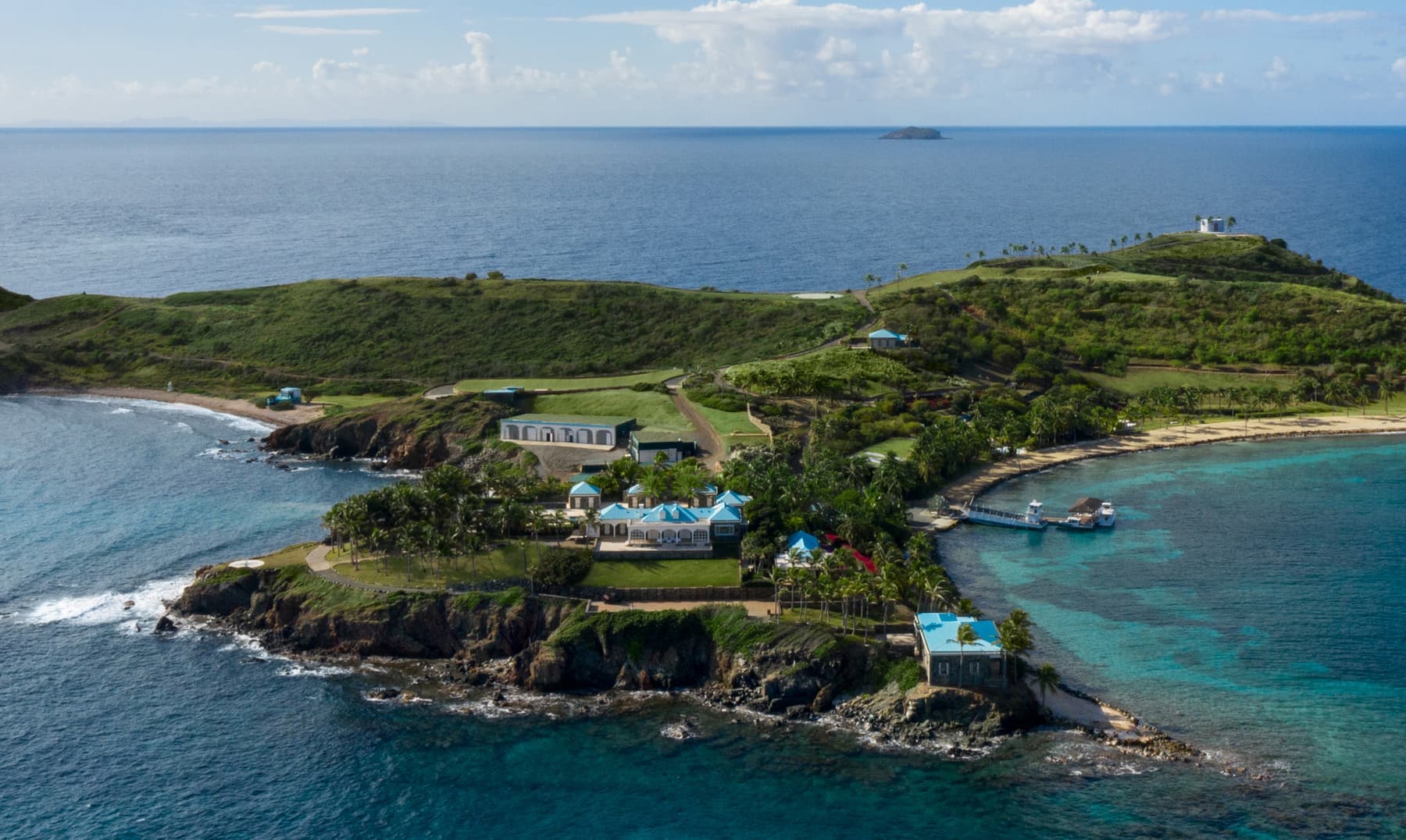
Great St. James Island, USVI

Great St. James Island, a 165-acre island in the US Virgin Islands purchased by Jeffrey Epstein in 2016 for $18 million. Aerial photography revealed extensive unpermitted construction and land clearing before his 2019 arrest.

Great St. James Island: Jeffrey Epstein's Second Private Island, the $18 Million Purchase, and the Environmental Destruction That Followed

While Little St. James drew global attention, Epstein quietly acquired a second, much larger island just across the channel — a 165-acre property where unpermitted construction destroyed protected ecosystems, public beach access was eliminated, and ambitious building plans revealed the scope of his expansion in the Caribbean.

Sources: USVI AG Civil Complaint, DPNR Records, Property Filings, Environmental Assessments

The Acquisition: Shell Companies and a $18 Million Deal

In 2016, Jeffrey Epstein purchased Great St. James Island for approximately $18 million. The acquisition was conducted through a web of shell companies registered in the US Virgin Islands — a pattern consistent with Epstein's approach to real estate transactions across his entire property portfolio. The purchasing entity, Great St. James Island LLC, was one of dozens of limited liability companies that Epstein controlled through layers of corporate structure designed to obscure beneficial ownership.

Great St. James sits directly adjacent to Little St. James in the island chain southeast of St. Thomas. At 165 acres, it is more than twice the size of the 70-acre Little St. James, which Epstein had owned since 1998. The two islands are separated by a narrow channel known as Current Cut, only a few hundred yards wide. By acquiring both islands, Epstein effectively controlled access to a significant stretch of the coastal waters southeast of St. Thomas and created a combined private land mass exceeding 235 acres in the heart of the US Virgin Islands.

The purchase itself raised questions among USVI residents and officials. Great St. James had been a well-known destination for recreational boaters, snorkelers, and day-trippers from St. Thomas for generations. Christmas Cove, a sheltered anchorage on the island's western shore, was one of the most popular day-trip destinations in the entire territory. The privatization of an island that had served as a de facto public recreational area was met with immediate backlash from the local community.

Christmas Cove and the Loss of Public Access

Christmas Cove had been a beloved anchorage for USVI residents and visiting sailors for decades. The naturally protected bay on the western side of Great St. James offered calm waters, a sandy bottom for anchoring, excellent snorkeling along the rocky shoreline, and a floating bar and restaurant (the "Pizza Pi" boat) that had become an iconic destination. For many St. Thomas residents, a boat trip to Christmas Cove was a weekend tradition passed down through generations.

After Epstein's purchase, access to the island's beaches and shoreline was restricted. While the cove's waters remained navigable under maritime law, security personnel employed by Epstein's companies began monitoring boat traffic near the island and discouraging visitors from coming ashore. The psychological effect was significant: a formerly welcoming recreational area became associated with surveillance and intimidation. Local boat operators reported being confronted by Epstein's security teams when approaching the shoreline, creating a chilling effect on public use even in areas where legal access may have been preserved under Virgin Islands coastal access laws.

Unpermitted Construction and Environmental Devastation

The most consequential aspect of Epstein's ownership of Great St. James was the extensive construction activity he initiated without proper permits. Beginning shortly after the purchase, Epstein deployed heavy equipment to the island and began large-scale land clearing and grading operations. Aerial photographs from 2017 and 2018 showed bulldozers, excavators, dump trucks, and construction barges operating on the island, with significant acreage of native vegetation stripped and earthwork underway.

The US Virgin Islands Department of Planning and Natural Resources (DPNR) documented that Epstein's construction proceeded without the required environmental impact assessments, building permits, or coastal zone management approvals. The agency issued multiple cease-and-desist orders, but enforcement proved ineffective. Epstein's legal team responded to regulatory action with delays, procedural challenges, and applications submitted after construction had already begun or been completed — a strategy that effectively rendered the permitting process retroactive rather than preventive.

The environmental damage was documented in detail by the USVI Attorney General's 2020 civil complaint. According to the filing, unpermitted construction on Great St. James caused direct destruction of coral reefs in the nearshore waters, damage to mangrove habitats along the coastline, sedimentation of marine areas from uncontrolled runoff, and the destruction of native dry forest and cactus scrub ecosystems. The complaint specifically cited the damage to coral colonies that had taken decades or centuries to grow, noting that some affected reefs contained species listed under the Endangered Species Act.

Satellite imagery and drone photographs taken between 2016 and 2019 documented the progressive transformation of the island. Forested hillsides were stripped to bare earth. Roads were cut through previously undisturbed terrain. Flat pads for building foundations were carved into hillsides. Runoff from exposed soil visibly discolored the surrounding waters, creating sediment plumes that drifted over reef areas. The contrast between pre-purchase and post-purchase aerial imagery was stark — a largely green and undeveloped island was systematically converted into an active construction zone.

The Building Plans: What Epstein Intended to Build

Architectural plans and permit applications that were eventually filed with the DPNR revealed the scale of Epstein's ambitions for Great St. James. The development plans included a residential compound with multiple structures, a marine research facility, extensive road networks, water management infrastructure, and dock facilities. The plans suggested that Epstein intended to develop Great St. James into a functional extension of his existing compound on Little St. James — effectively doubling the built footprint of his Caribbean operation.

The stated purpose of the "marine research facility" drew particular scrutiny. Epstein had a documented pattern of using scientific and philanthropic framing to legitimize his activities. His DNA-focused scientific interests — which extended to widely reported discussions about seeding the human race with his DNA and what The New York Times characterized as a long-standing interest in eugenics — raised questions about the true purpose of any research-oriented facility he proposed. No credible marine research institution or university partner was ever publicly identified in connection with the Great St. James plans.

Shell Company Architecture and Financial Opacity

The corporate structure behind Epstein's USVI holdings was deliberately complex. Great St. James Island LLC was just one entity in a network of limited liability companies that Epstein used to hold real estate, employ staff, manage construction projects, and conduct financial transactions in the Virgin Islands. Other entities included Southern Trust Company, Plan D LLC, and various special-purpose vehicles created for specific transactions.

This corporate architecture served multiple purposes. It obscured Epstein's personal role in transactions, created liability barriers between different assets, complicated regulatory enforcement actions, and made it difficult for investigators to trace the full scope of his financial activity. The USVI Attorney General's complaint alleged that Epstein used these shell companies not only for legitimate asset protection but also to facilitate his trafficking operation — employing victims through corporate entities, paying for their travel, and creating paper trails that disguised the true nature of the relationships.

Epstein also benefited from USVI tax incentive programs designed to attract business investment to the territory. Through his companies, Epstein received significant tax benefits under the Virgin Islands' Economic Development Commission (EDC) program, which offers reduced tax rates to businesses that create jobs and invest in the territory. The USVI government later faced intense criticism for having granted these benefits to Epstein, and the tax arrangements became a focus of the Attorney General's civil action.

The Workforce: Labor on the Island

Construction on Great St. James employed dozens of workers, primarily recruited from the local USVI labor pool and from neighboring Caribbean islands. Workers were transported to the island by boat each day, often departing from Red Hook or Charlotte Amalie on St. Thomas. The construction workforce operated under conditions that the USVI AG complaint characterized as tightly controlled — workers were required to sign non-disclosure agreements, their movements on the island were restricted to designated construction zones, and they were prohibited from photographing the island or discussing their work.

Despite these restrictions, some construction workers became sources for investigators. Their accounts helped establish the timeline and scope of construction activity, the environmental damage that resulted, and the connection between development on Great St. James and operations on the adjacent Little St. James compound. The workers' observations, combined with aerial documentation, formed a key component of the evidentiary record that supported the USVI government's lawsuit.

After Epstein: Transfer and Remediation

Following Epstein's death in August 2019, construction on Great St. James ceased. The island, along with Little St. James, was included in the 2023 settlement between Epstein's estate and the USVI government. Both islands were transferred to the territory as part of the agreement, returning Great St. James to public ownership for the first time since its 2016 sale.

Environmental remediation of Great St. James is expected to be a long-term undertaking. The destruction of coral reefs and mangrove habitats cannot be reversed quickly — coral growth is measured in millimeters per year, and damaged reef systems may take decades to recover, if they recover at all. The removal of construction equipment, stabilization of exposed earthwork to prevent further erosion, and restoration of native vegetation are among the remediation priorities identified in the settlement terms.

For USVI residents, the transfer of Great St. James back to public ownership represents both a measure of justice and a reminder of what was lost. The ecological damage inflicted during Epstein's three years of ownership left scars on an island that had been a natural treasure of the territory. The question of how to restore and manage the island going forward — whether as a conservation area, a public park, or some combination — remains an active topic of discussion in the Virgin Islands legislature and community.

Timeline: Great St. James Island

Pre-2016

Great St. James is undeveloped; Christmas Cove serves as a popular public anchorage for USVI residents and visitors

2016

Jeffrey Epstein purchases Great St. James for approximately $18 million through Great St. James Island LLC

2016-2017

Heavy equipment transported to island; large-scale land clearing begins without required permits

2017

USVI DPNR issues cease-and-desist orders for unpermitted construction; orders largely ignored

2017-2018

Satellite imagery shows progressive deforestation, road cutting, and foundation grading across the island

2018

Sediment plumes from construction runoff documented over nearshore coral reef areas

2018-2019

Retroactive permit applications filed; environmental impact assessments submitted after construction damage already done

July 2019

Epstein arrested; all construction activity on Great St. James halts

Jan 2020

USVI AG includes Great St. James environmental destruction in civil complaint against Epstein's estate

Nov 2023

Great St. James transferred to USVI government as part of $105 million settlement

2024+

Environmental remediation planning underway; future public access and conservation use under discussion

Related Evidence & Sections

All information sourced from USVI Attorney General civil complaint, DPNR enforcement records, property filings, environmental assessments, and publicly available aerial imagery. This page presents publicly documented facts for educational and documentary purposes.

Privacy|Terms